
 About drasties
 Contact Us
 Chat Room
Nsfw (not suitable for work)… pas op moslima tienerporn!
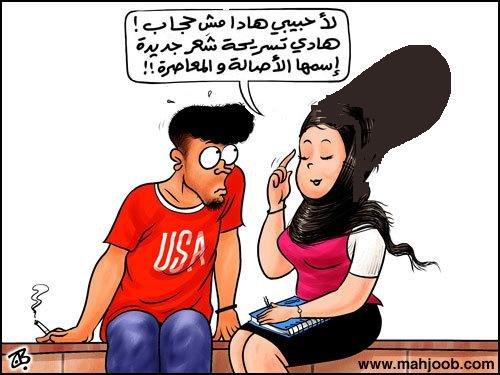
Het is u misschien wel eens opgevallen dat moslima’s hun haren bedekken. Nee? Nou dat moet van Allah. Anders worden vrouwen bij bosjes aangerand door mannen. Maar nu blijken die ondeugende moslimmeiden toch een truc te hebben gevonden om de aandacht op hun haar te vestigen. Dat doen ze door onder de hijab een toren van weelderig, prachtig glanzend, heerlijk ruikend, eindeloos lang haar te construeren. Het heet de Abu Nafkha-stijl en is te zien aan een ver omhoog stekende hoofddoek.
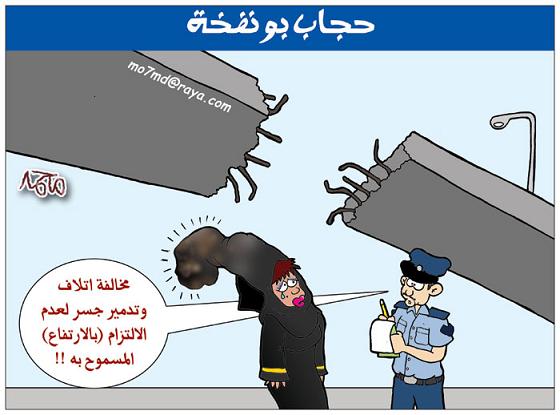
De rage begon in de Golfstaten - Saoedi-Arabië, Abu Dhabi, Yemen - maar rukt snel op in Egypte, Iran, enz. En ook het Westen zal er aan geloven. Oftewel, nog even en ook in Nederland moet de hoogte van viaducten worden aangepast.
Is het een teken van stil protest van jonge moslima’s tegen de mannenheerschappij? Geeft het aan dat moderne moslimvrouwen zich niet langer wensen te gedragen zoals de profeet Mohammed (vzmh) in de Middeleeuwen al dan niet (zekerheid bestaat er nooit in religie) heeft voorgeschreven?
Zeker is wel dat de imams met de handen in het haar zitten. Er wordt internationaal gestudeerd op fatwa’s en er zijn berichten dat Saoedi-Arabië met spoed kappers heeft opgeroepen te solliciteren bij de religieuze politie.
Meer schokkende afbeeldingen hieronder…
marge simpson-stijl rukt snel op in islamitische wereld
Clerics Split Hairs Over Latest Hijab Fashion
The Media Line - It’s called the Abu-Nafkha-style Hijab. It’s popular, especially among teenagers and women with a flare for the flamboyant, and it has clerics and fashion aficionados fuming.
Abu-Nafkha is a relatively new style of Hijab, the religious headscarf worn by Muslim women, and is slowly gaining popularity throughout the Arab world.
The style is called Abu-Nafkha, or “puffed” because it involves creating a bulge under the scarf, usually by placing a large floral hair clip at the back of the head to add volume. This makes women look as if they have very thick hair.
But some argue this is wrong, because it gives a false impression. In essence, they say, the Hijab is meant to hide the hair as an act of modesty, not draw attention to it.
read on>>
The Abu-Nafkha-style Hijab first appeared in the Gulf and is spreading across other countries in the Middle East, though it is apparently less common among Muslim women in the West.
Along with its rising popularity, it has also drawn criticism for being too outlandish, alien-like, distasteful, immodest, or awkward.
One web forum launched an Internet campaign against the puffed Hijab, likening it to a tilted camel’s hump.
LINK: http://forum.bnateeen.com/t4382/
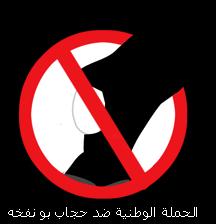
There are at least three Facebook groups calling to ban the style, who back this up by citing Quran verses and religious oral traditions.
“The Abu-Nafkha Hijab has become so widespread, to the extent that sheikhs have discussed it in televised speeches and clarified that it is haram [forbidden] because it draws attention in a way that’s unnatural,” one of the Facebook group administrator wrote. “These girls have become the butt of everyone’s joke. It shamelessly mars their appearance.”
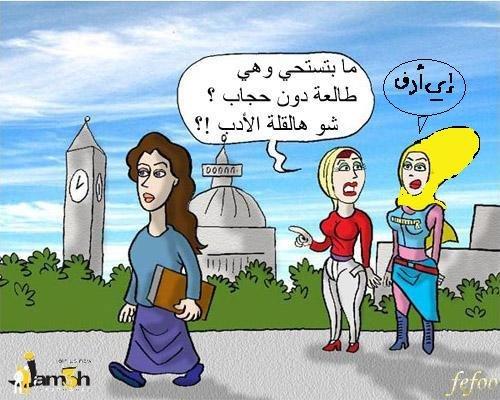
The Internet is awash with cartoons poking fun at the puffed Hijab, such as one in which a policeman is giving a woman a ticket for damaging a bridge by not abiding by restrictions on height, or another with a caption reading “Help me! This Abu-Nafkha Hijab is heavy!”
In Yemen, where, young girls don the enhanced headdress, clerics are taking on the role of fashion police.
According to the London-based website Elaph, several so-called radicals from different schools of thought have declared war against the puffed Hijab. At the University of San’aa, anti-Abu-Nafkha sentiments were manifested on billboards, brochures and through cartoons and statements.
Some of these fliers and posters around campuses in San’aa said the bearers of the puffed Hijab “will not find paradise or even smell it.” They were signed by a group made up of lecturers from the Islamic studies department at San’aa University.
Inas Samir, the Cairo-based owner of the online Muslim fashion store agreed that the style is gaining footing, but said this was mostly restricted to the lower classes.
LINK: www.2hijab.com
“In Egypt, some women are seen wearing such a style, but not from the upper, middle or high-class Muslim women,” she told The Media Line. “In Egypt women with good taste in fashion don’t like that style at all. We believe that it became popular because it reflects that women’s hair is long, and it’s a symbol of beauty in Arab countries to have long, soft black hair.”
“As for Muslim scholars,” said Samir, “the word Hijab means a screen and the purpose of [the] Hijab is to hide the shapes and curves of a woman’s body. A Hijab is not meant only [as] a head covering but [it is meant to cover] the entire body, so wearing tight abaya dresses or wrapping the Hijab in a way to reflect that you have long hair or a big bust or a big bottom is not considered Islamic dress code. Dressing correctly means that what you wear should not describe your body.”
“Religious authorities say that this wrap doesn’t comply with Muslim dress code,” contended Samir.
Sawsan, a Yemeni science student who champions the Abu-Nafkha-style Hijab, told Elaph she paid no attention to rulings against the style, although admitted that they did scare her.
“This fever will pass when it turns into a more general matter and isn’t limited to a small number of girls,” she said. “They’ll come to see that this has become a reality, in the same way that new styles of pants came into fashion.”
Jana Kossaibati, editor of Hijab Style – “The UK’s first style guide for Muslim women” – said she noticed the emergence of this style mostly among the younger generation.
“Young women are always eager to try out new trends, especially those that come out of the Gulf, as they are often associated with luxury and high fashion,” she told The Media Line.
“Religious authorities always seem to be trying to control women’s expression of fashion, perhaps for fear that trying unconventional styles is somewhat a rejection of religious values. However, I believe it should be treated like any other fashion trend that will probably die out with time.”
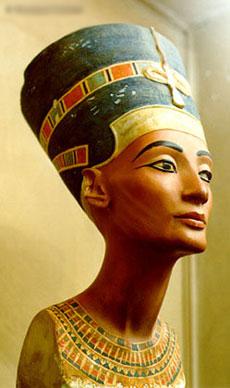
مسكينه ما تدري ان في ناس بقلدونها بس بطريقة حديثة









mei 31st, 2010 at 12:52 pm
Sinds wanneer is een waterhoofd aantrekkelijk?
mei 31st, 2010 at 1:03 pm
They’re all the same,
and it’s a shame!
mei 31st, 2010 at 1:06 pm
kaalscheren?
mei 31st, 2010 at 1:26 pm
O-h-m-y-g-o-d
mei 31st, 2010 at 1:27 pm
So this is what grownup men in the Arab world are occupied with?
mei 31st, 2010 at 1:28 pm
Het zijn wel altijd weer die vrouwen he!
Ik zeg maar.
mei 31st, 2010 at 1:28 pm
No wonder they have invented zilch…
mei 31st, 2010 at 2:13 pm
Kom op meiden, the sky is the limit!
mei 31st, 2010 at 2:48 pm
Apiedape:
mei 31st, 2010 at 3:31 pm
Doe liever eens wat aan die dikke bulten bij hun reet…
mei 31st, 2010 at 3:46 pm
Geert Wilders werkt al aan een voorstel om het toekomstige belastingtarief voor hoofddoeken afhankelijk te maken van de hoogte van de hoofddoek.
mei 31st, 2010 at 3:48 pm
Ach mensen, je ziet af en toe dames met een hoofddoek die zulke strakke truitjes aan hebben dat zelfs ik een automatische ‘nou nou nou’ reactie ervan krijg. Of ze lopen op torenhoge rode naaldhakken. Stinken een uur in de wind naar dure parfum.
Dat hele hoofddoek gebeuren is toch één groot fetisj-feest, of niet dan? Het enige wat ze ermee willen communiceren is: “Ik ben maagd, geil hè?”
Of ga ik nu te ver? Als het zo is mogen jullie het zeggen hoor.
mei 31st, 2010 at 3:52 pm
Nee hoor niet te ver, ga gerust nog even door…
mei 31st, 2010 at 4:07 pm
OK! Waar ik ook een bloedhekel aan heb is moslima’s die roepen dat ze ‘ooit’ een hoofddoek zullen gaan dragen maar er ‘nu nog niet klaar voor zijn’. Wanneer wil je het fucking ding dan wel gaan dragen? Als al je vel op je knieën hangt en überhaupt niemand meer naar je kijken wil??? Is je goed recht, lijkt mij ook een veel betere optie, maar hou dan op met het hoofddoek dragen te verdedigen want je maakt er zelf een FARCE van.
(Zo, ik weet dat degene die ik in gedachten heb niet meeleest, maar toch lucht dit op een of andere manier wel op… dank je Drasties)
mei 31st, 2010 at 5:23 pm
En onder hun kleren zijn ze naakt!
mei 31st, 2010 at 6:08 pm
Potverdikkie nou!
mei 31st, 2010 at 6:23 pm
meneer De la Palisse heeft gesproken op 15.
mei 31st, 2010 at 7:34 pm
Greet,
Oh ik vind ze zo mooi, die moslima’s die van twee werelden het beste nemen. Hoge hakken, strakke leggings, losse chador die toch om het lijf heen fladdert en dus alles laat raden. Echt mooier dan minirokjes met perspex laarzen eronder en een topje erboven.
mei 31st, 2010 at 7:42 pm
In afgezakte vorm lopen veel rasta lui met hetzelfde kapsel in een gebreide muts gehuld door Rotterdam.
Die hoge haartorens vind ik nog altijd beter dan http://www.thijs.scarlet.nl/paginas/mursi.htm
juni 1st, 2010 at 6:46 am
@17 lalu
La Palisse was niet onder maar zonder zijn kleren naakt:
“[…] Et quand il était tout nu,
il n’avait point de chemise.”
(Moslima’s trouwens ook, maar dat was niet wat ik in de eerste instantie beweerde.)
juni 1st, 2010 at 6:50 am
Vertaling cartoon 1:
“Maar mevrouwtje, als ik de hele dag met mijn eh… dinges omhoog liep zouden er ook ongelukken gebeuren!”
juni 1st, 2010 at 11:20 am
@18 Ja hartstikke mooi. Het is alleen zo lelijk wat er meestal uit hun monden komt, dat verpest het een beetje.